
Menopause and perimenopause can bring significant changes to the body and mind, but one of the most effective ways to support your health and wellbeing during this transition and beyond is surprisingly simple: strength training. Backed by a growing body of research, regular strength training offers wide-ranging benefits—from improving low mood and disturbed sleep to reducing the risk of heart disease and dementia.
Why Strength Training Is So Important
At menopause, most of us experience an increase in body fat and a loss of muscle and bone mass. Strength training targets these changes by building lean muscle (and reducing fat stores), which in turn supports metabolism and bone health.
The benefits include:

- Improved blood pressure and heart health
- Lower rates of diabetes and associated metabolic conditions
- Lower risk of dementia
- Increased bone density and lower risk of osteoporosis
- Greater mobility and functional fitness
- Improved immune function
Better symptom control at menopause, including
- Fewer hot flushes and night sweats
- Improved mood
- Improved sleep
- Improved cognition
Large-scale studies have shown that strength training just twice a week is associated with reduced all-cause mortality.
Strength training is especially important if you’re on a GLP-1 like Wegovy or Mounjaro, as studies have shown significant rates of muscle loss, especially at the beginning of treatment, and that this muscle loss is lower if the GLP-1 treatment is combined with strength training.
The evidence is compelling: strength training is one of the most effective tools available for supporting health at midlife and beyond.
What Counts as Strength Training?
There is much confusion over “what counts” as strength training and how it differs from weight-bearing exercise (all forms of which are helpful for bone health). At its core, strength training involves using your muscles to push or pull against a force. This force can come from:
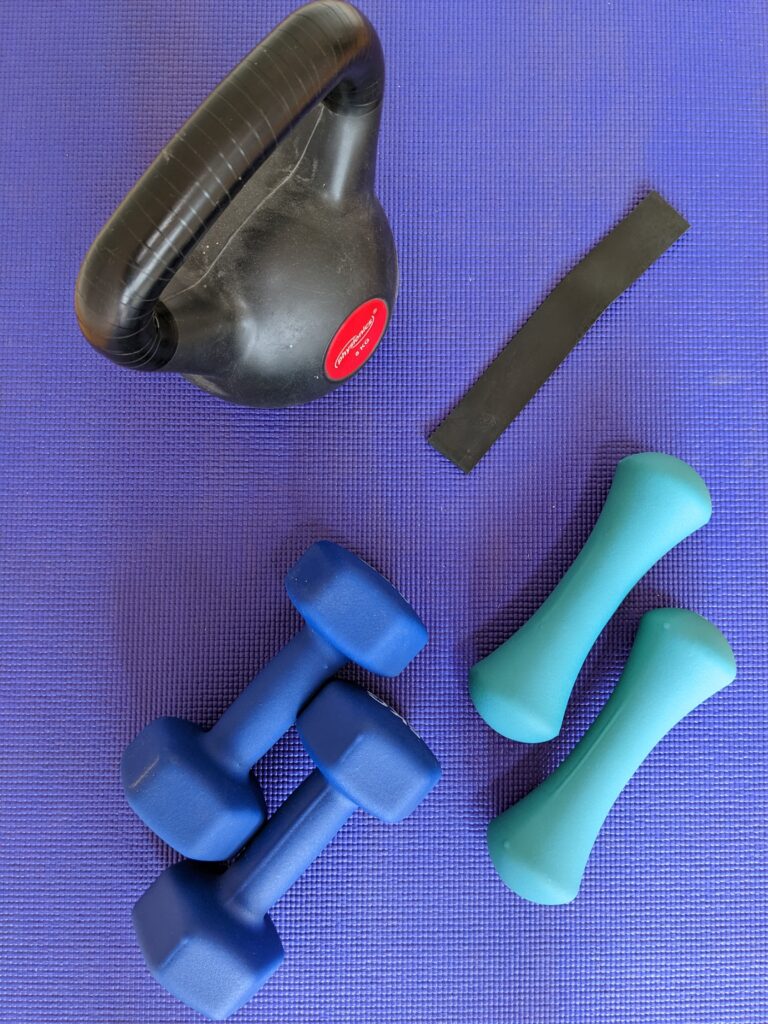
- Your own body weight (e.g. squats, push-ups)
- Resistance bands
- Weights such as dumbbells or kettlebells (or tins of beans or bottles of water!)
It doesn’t need to be complicated or time-consuming. Even 15 minutes, two to three times per week, can make a meaningful difference.
Importantly, strength training doesn’t require a gym. It can be incorporated into other activities
- Adding a few lunges and push-ups against a tree at the end of a walk
- Keeping a kettlebell in the kitchen for some kettlebell squats when the kettle is boiling.
- Adding a resistance band to your home yoga practice
Consistency matters far more than complexity.
Building an Effective Routine
A well-rounded strength training program should target all major muscle groups at least twice per week. A simple structure might include:
- 1-3 sets of 6–10 repetitions for each exercise. The last few reps should feel challenging
- Focus on key movement patterns:
- Hinge (e.g. Romanian deadlift)
- Push (e.g. overhead press)
- Pull (e.g. rows)
- Squat
- Lunge
- Step (e.g. step-ups)
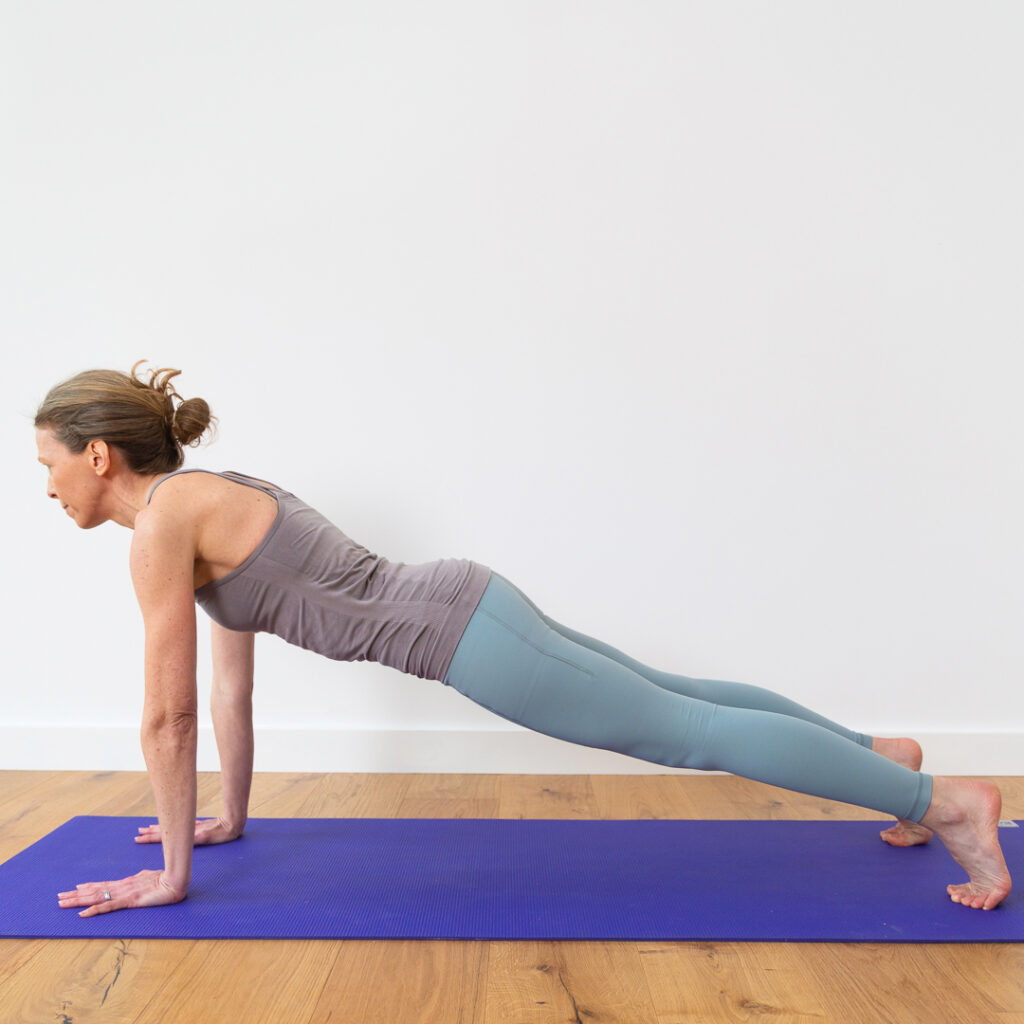
- Brace (e.g. planks)
- Progression is important, so for example, over time, aim to use a heavier weight
- Incorporate power (rapid, intense movements), which has been shown to be of particular benefit to long-term function and mortality
- Balance work is useful too – you could try a single-leg Romanian deadlift
Supporting Your Training
A few additional considerations can help you get the most out of strength training:
- Start gradually
- If you’re new to strength training, start with bodyweight exercises
- Joint pain/Hypermobility
- Strength training usually helps with joint pain and hypermobility, but start low and go slow, and focus on proper form. Working with a qualified trainer—even for a few sessions—can be invaluable.
- Pelvic floor concerns
- If you have a prolapse or experience urinary leakage, you can still strength train, and it can be really helpful for your pelvic floor symptoms. Do consult a pelvic health physiotherapist for personalised advice, so you’re lifting safely and effectively with good breath control and technique.
- Nutrition
- Fuel your workouts with carbohydrates beforehand and prioritise protein intake soon after to support muscle repair and growth. Aim for around 1.2g protein/kg of body weight/day
- Consider creatine supplementation
- Creatine monohydrate, 3.5-5g daily, has been shown to support muscle mass. Found naturally in meat and fish, it is available as a powder to be easily added to hot drinks or stirred into yoghurt. It is well evidenced, particularly for women during menopause, and can also help with energy levels, mood and cognition.

Keep It Simple—and Consistent
Perhaps the most important message is this: something is always better than nothing. Strength training doesn’t need to be perfect, and it doesn’t need to take long. The best approach is the one you can stick to consistently.
Whether it’s a short home workout, adding resistance bands to your yoga practice, or incorporating a few exercises into your daily routine, small, regular efforts can lead to significant long-term benefits.
Final thoughts
Strength training is one of the most powerful, evidence-based ways to support your body and mind through menopause. It’s accessible, adaptable, and highly effective—and it’s never too late to start. I’ll share some videos soon of some of the exercises I like to incorporate in my own training.
Further Resources
- Dr Rangan Chatterjee’s 5 minute kitchen workout can be a great place to start with some strength training, no kit or special clothing is needed!
- Joe Wicks has developed some strength-based home exercise routines for menopause: Strength Workout 1 and Strength Workout 2.
- Locally, I can recommend Vicki Hill, Laura Gibb, Jo Hargreaves and Polly Turnill as personal trainers who specialise in supporting women at menopause.
- Royal Osteoporosis Society exercise and physical activity for balance and strength
- American College Sports Medicine Resistance Training Guidelines Update 2026
- Dr. Stacy Sims
- Training For Your Old Lady Body – by Elizabeth Davies